

What Every Stripe, Star And Colour On The Jalur Gemilang Actually Means
Festival
12 Aug 2026
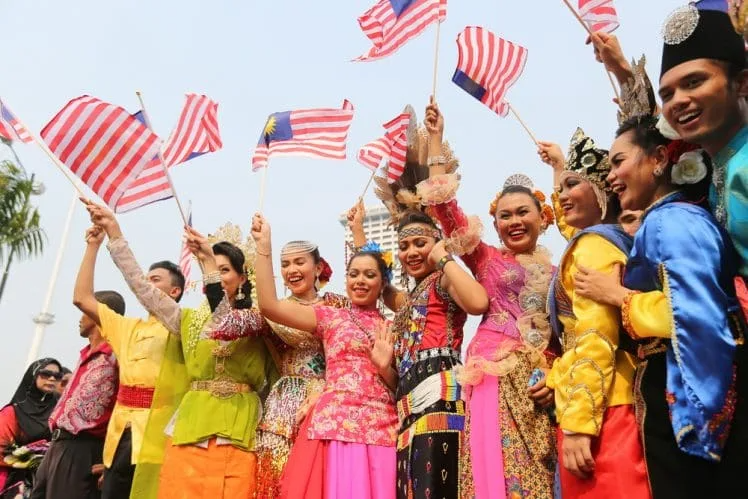
There's a reason the Jalur Gemilang stops you in your tracks every August, whether it's fluttering from a shoplot awning, taped to a car window, or lighting up the ceiling here at Pyramid.
We've all sung along to it at school assembly and waved a little paper version of it since we were kids, but how many of us actually know why it looks the way it does? Every stripe, point and colour on our flag was chosen on purpose, and the story behind it is really the story of how modern Malaysia came together.
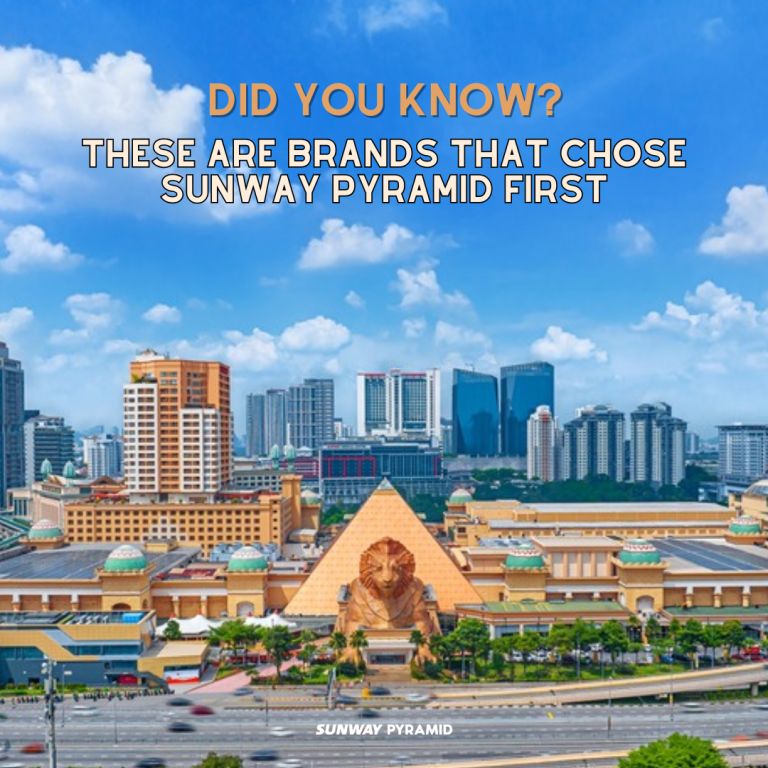
This National Month, as you make your way past the Merdeka decorations around Sunway Pyramid, here's the full story behind what you're looking at.
Where did the Jalur Gemilang come from?
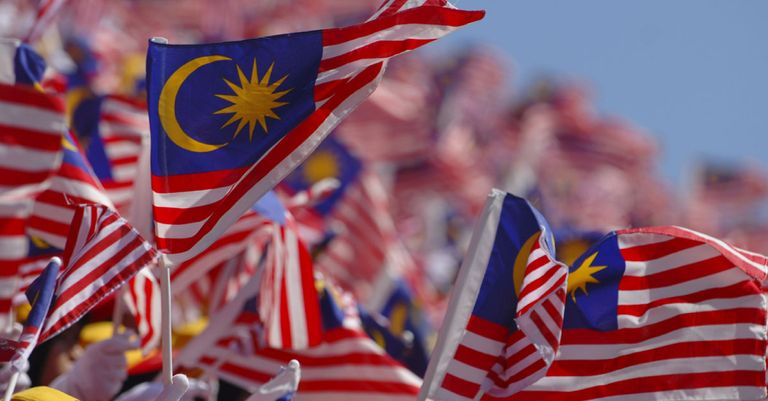
Before independence, Malaya flew flags shaped by whoever was in charge at the time. Portuguese, Dutch and British administrators each left their own mark, and none of those flags really belonged to the people living here.
That changed with a national flag design competition ahead of independence. The winning design came from Mohamed Hamzah, a government architect, and it's the same basic design we still recognise today: alternating red and white stripes with a crescent and star on a blue canton. It was officially adopted on 26 May 1950, though back then it only had 11 stripes and an 11-point star.
That original flag is the one Tunku Abdul Rahman raised at Merdeka Square on 31 August 1957, the exact moment independence was declared.
The flag got its current look a few years later. When Malaysia was formed on 16 September 1963, bringing together Malaya, Singapore, Sabah and Sarawak, the flag was redesigned to represent the bigger federation. Three more stripes and three more star points were added, taking us to the 14 and 14 we know today, even after Singapore left the federation in 1965.
The name we use now took even longer to arrive. It wasn't until 31 August 1997, on the 40th anniversary of independence, that then-Prime Minister Tun Dr Mahathir Mohamad officially named it Jalur Gemilang, or "Stripes of Glory."
So what do all those stripes actually mean?
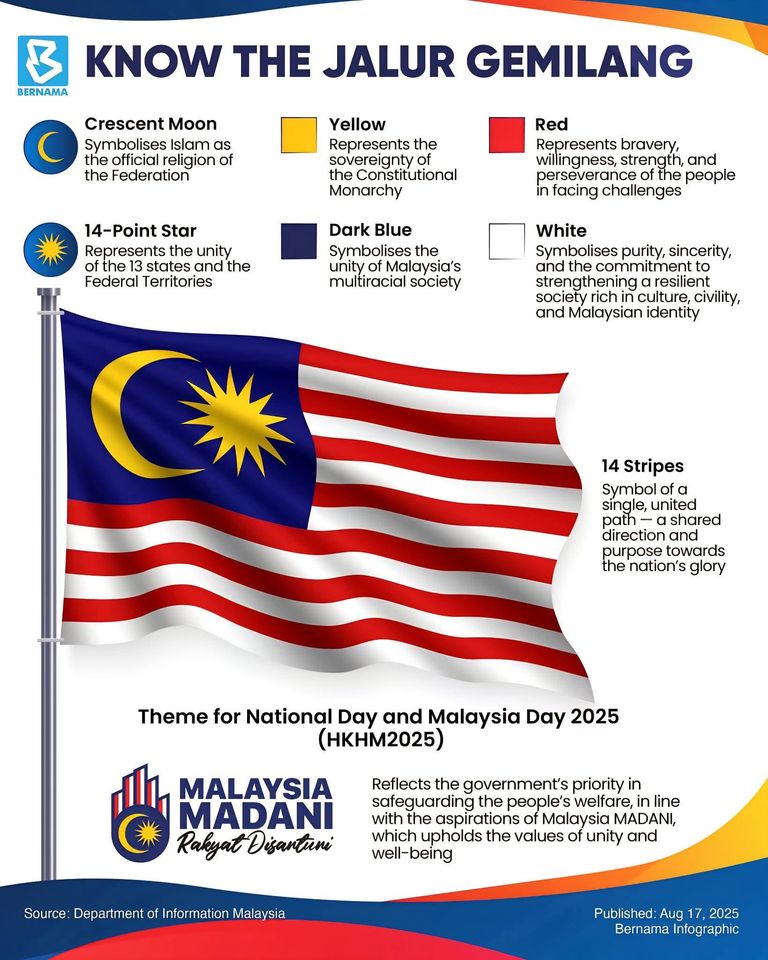
Here's the breakdown, element by element.
The 14 stripes
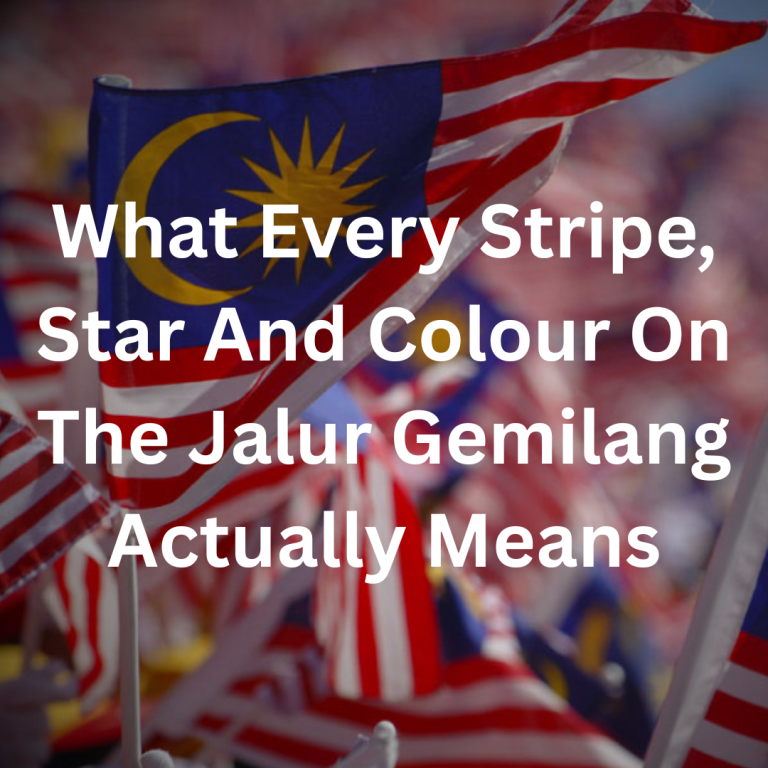
The alternating red and white stripes running the length of the flag aren't just there to look good. They represent the equal status of Malaysia's 13 states and the federal government within the federation, side by side, no state bigger than another.
The 14-point star
Up in the blue canton sits the Bintang Persekutuan, or Federal Star. Its 14 points mirror the 14 stripes exactly, and where the stripes stand for equal status, the star stands for unity, the thing that actually holds all those states and the federal government together as one country.
The crescent moon
The crescent alongside the star represents Islam, Malaysia's official religion.
The colours
Each colour on the flag carries its own meaning too:
- Red — courage and boldness
- White — purity and integrity
- Blue — unity of the Malaysian people
- Yellow — the royal colour of the Malay Rulers, used on the star and crescent
Put it all together and the flag is really telling two stories at once. The stripes and their colours speak to the character of the people, while the star, crescent and their colour speak to the institutions, faith and royalty, that shape the federation.
Why "Jalur Gemilang"?
The name is worth sitting with for a second. Jalur means stripe, and gemilang means glorious or brilliant. So the name doesn't just describe the flag, it makes a statement: these aren't just stripes, they're stripes of glory.
A flag with a very tall home
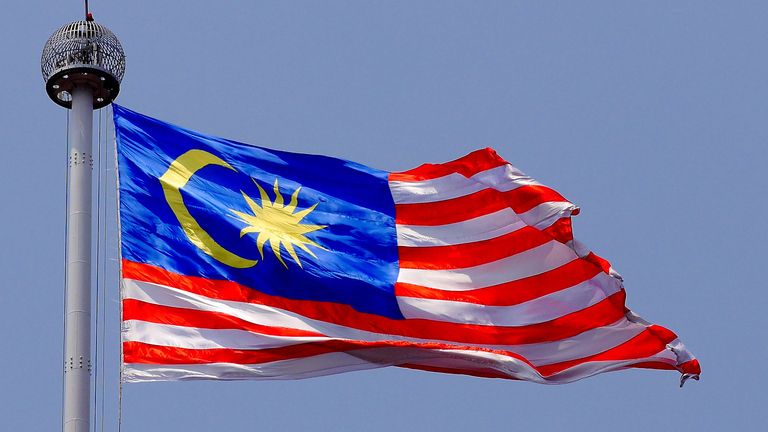
Fun fact if you've ever visited Dataran Merdeka: the flagpole there stands around 100 metres tall, making it one of the tallest free-standing flagpoles in the world. It's the same ground where the Jalur Gemilang first went up back in 1957.
See Merdeka 2026 come to life at Sunway Pyramid
Now that you know the story behind every stripe and star, come see it in person. This Merdeka, Sunway Pyramid is bringing the Jalur Gemilang's spirit into the mall with our Malaysia in Motion campaign.
From 20th August till 20th September, catch all the decor, activities and the deals waiting for you across the mall!